
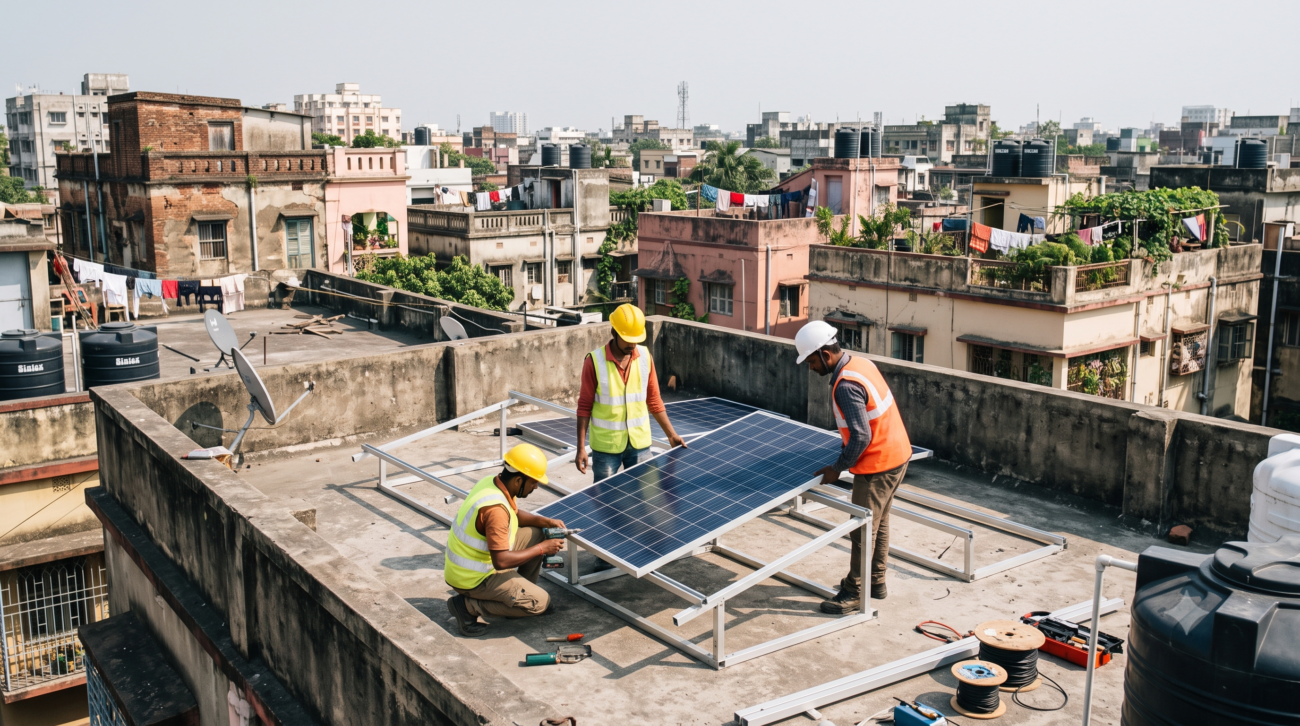
After “how much will it cost?”, the next question most homeowners ask is “how long will it take, and what actually happens?” For solar panel installation in Kolkata, the honest answer is that the panels themselves go up in a few days, but the full journey, from first site survey to a working net meter, usually takes around 45 to 90 days. Most of that time is approvals and paperwork, not construction. Here is every stage in order, so nothing catches you off guard.
The Timeline at a Glance
| Stage | What happens | Who handles it | Typical time |
|---|---|---|---|
| 1. Site survey and sizing | Roof check, shading review, bill analysis | Installer | 1 to 3 days |
| 2. Portal registration | Application on the PM Surya Ghar portal | You, with your installer | 1 day |
| 3. Feasibility approval | Power utility confirms your connection can take a rooftop system | CESC or WBSEDCL | 7 to 15 days |
| 4. Equipment delivery and installation | Structure, panels, inverter, wiring | Installer | 7 to 15 days overall (1 to 3 days on the roof) |
| 5. Net meter installation | Two-way meter replaces your existing meter | Power utility | 15 to 30 days, sometimes longer |
| 6. Inspection and commissioning | System checked and switched on | Power utility | 7 to 15 days |
| 7. Subsidy credit | Paid into your bank account | Central government | About 30 to 45 days after commissioning |
These are typical ranges, not guarantees. The stages that depend on the power utility are the ones most likely to vary.
Step 1: Site Survey and System Sizing
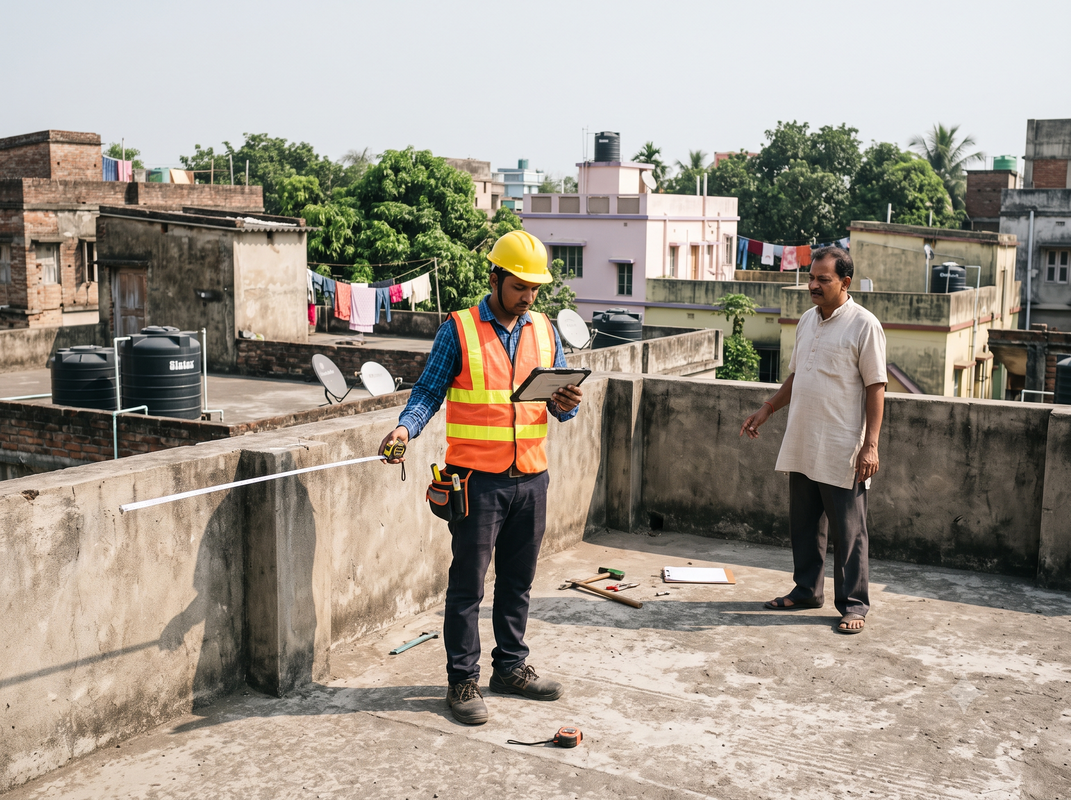
A good installation starts with someone actually visiting your roof. The survey checks your roof type and condition (flat concrete, tin, or tiled), how much shadow-free space you have (roughly 100 sq. ft. per kW), and shading from neighbouring buildings, trees, water tanks and staircase rooms. Your last 6 to 12 months of electricity bills are used to size the system.
You can get a ballpark size before anyone visits using our solar calculator. Enter your average monthly bill and it suggests a system size, cost, and payback period.
Step 2: Register on the PM Surya Ghar Portal
Your application goes through pmsuryaghar.gov.in. You select your state and your power utility (most of Kolkata is served by CESC, while WBSEDCL serves many other areas, and your electricity bill shows which one is yours), then enter your consumer number and mobile number. You will upload your electricity bill, ID, and a photo of the roof area.
If you live in a flat, sort out written consent from your housing society or co-owners for roof use before you register. It saves delays later.
Step 3: Feasibility Approval from Your Power Utility
Your power utility checks that your connection and the local network can take a rooftop system. This usually takes 7 to 15 days.
One rule matters a lot here: do not start installation or switch the system on before approval comes through. Commissioning ahead of the approval sequence can put your subsidy claim at risk. A good installer will not ask you to skip this step.
Step 4: Equipment and Installation
Once approved, the installer finalises the design and delivers the equipment. For subsidy eligibility, panels need to be ALMM-listed and DCR-compliant, and the exact models should be named in your quote (our buyer’s checklist covers how to verify this).
On the roof itself, installation of a typical home system takes 1 to 3 days: mounting structure, panels, inverter, earthing and cabling. Delivery and scheduling make up the rest of the 7 to 15 days. Ask for photos and the system documents at handover.
Step 5: Net Meter Installation
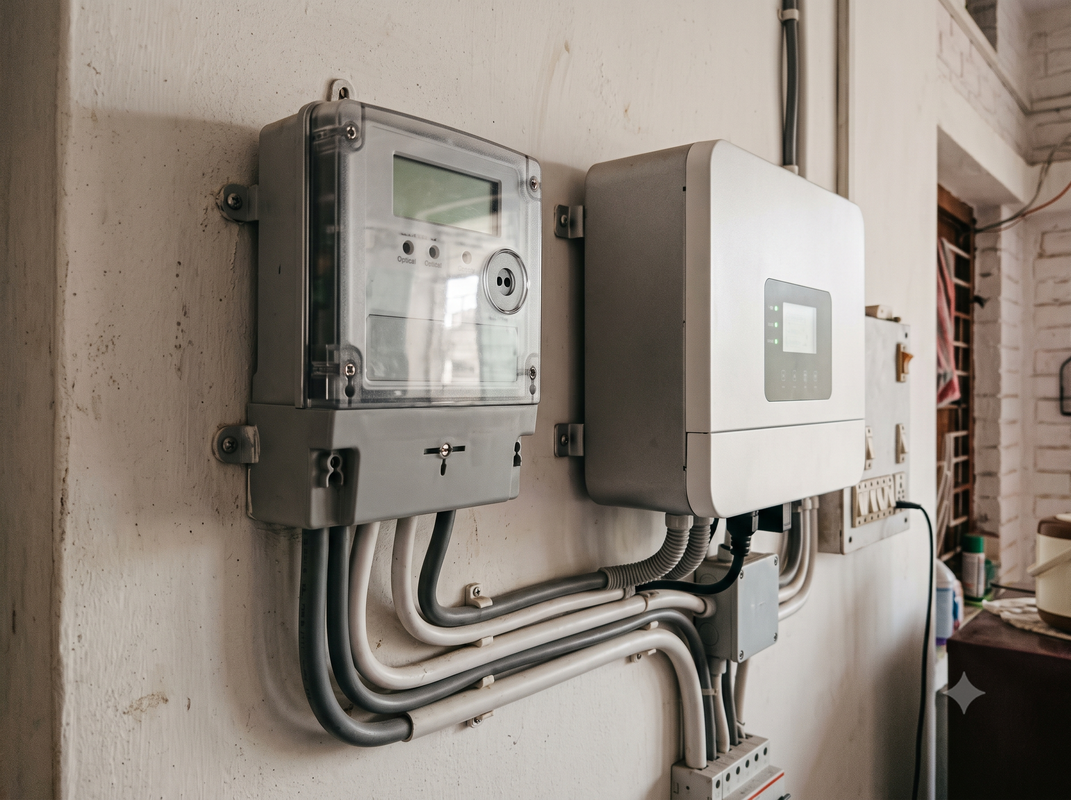
After installation, a net meter application is submitted and your power utility replaces your existing meter with a two-way meter. This typically takes 15 to 30 days, and can stretch longer in busy periods. Until it is fitted, your system is not exporting to the grid, so don’t expect bill credits yet.
Step 6: Inspection and Commissioning
Your power utility inspects the installation and issues a commissioning certificate. Once that is uploaded to the portal, the subsidy process starts. This is also the stage where your system officially goes live.
Step 7: Subsidy Credit
The central government releases the PM Surya Ghar subsidy directly into your bank account, typically about 30 to 45 days after commissioning. It is paid by the government under the scheme, not by your installer. For the amounts and eligibility details, see our guide to the West Bengal solar subsidy.
Where Delays Usually Happen
Most delays are in the stages your installer does not control:
- Mismatched documents. A name on the bill that differs from the Aadhaar or bank account is one of the most common causes.
- Unclear roof photos or an incomplete application, which trigger queries from the power utility.
- Unanswered queries. Feasibility questions that sit unread for a week add a week.
- Meter availability and scheduling at the power utility’s end.
- Missing society consent for flats.
How to Keep Things Moving
- Check that your name and details match across your bill, Aadhaar, and bank account before applying.
- Upload clear, well-lit roof photos.
- Respond to any query on the portal the same day.
- Track your application on the portal and follow up in writing every couple of weeks if a stage stalls.
- Choose an installer who handles the paperwork end to end, not just the panels.
What the Cost Looks Like
If you haven’t yet seen what a system costs before and after subsidy, our solar installation cost breakdown for West Bengal lays it out by system size.
Solar Panel Installation in Kolkata with Apris Solar
As an EPC (Engineering, Procurement, and Construction) company, Apris Solar handles the survey, design, equipment sourcing, installation, and the application paperwork as one team, so there is one point of contact from the first visit to switch-on. Every installation also comes with five years of free after-sales service, and EMI payment options are available if you would rather not pay in one go.
📞 WhatsApp us or visit apris.in/solar-company-contact-us to book a free site survey.